Miami's coastal humidity, elevated water tables, and high-density residential layouts create continuous biological pressure from nocturnal pests. In multi-unit towers across Brickell and Edgewater, German cockroaches exploit shared utility chases, electrical conduits, and trash chutes. Conversely, detached historic residences in Coconut Grove and Coral Way frequently face perimeter invasions from American cockroaches emerging from dense palm canopies and municipal drainage lines. Traditional extermination methods rely on broad synthetic aerosol fogging, which deposits volatile organic compounds across food preparation surfaces and fails to eliminate breeding aggregates nested inside wall voids. Targeted cockroach remediation operates as a clinical structural intervention designed to clear living quarters while maintaining interior air quality.
Technicians begin by establishing physical monitoring protocols consistent with integrated pest management frameworks defined by the US EPA Integrated Pest Management guidelines. The process initiates with high-efficiency particulate air (NIOSH-rated) vacuum extraction to remove active nymph and adult populations directly from motor compartments, sub-cabinet hinges, and baseboard crevices. Rather than saturating drywall with repellent sprays that drive nesting females deeper into the building infrastructure, technicians deploy micro-deposits of non-repellent matrix baits containing active ingredients registered under the Florida Department of Agriculture and Consumer Services. These matrices are placed inside unexposed void areas where cockroaches forage, facilitating horizontal secondary transfer through the aggregate nest.
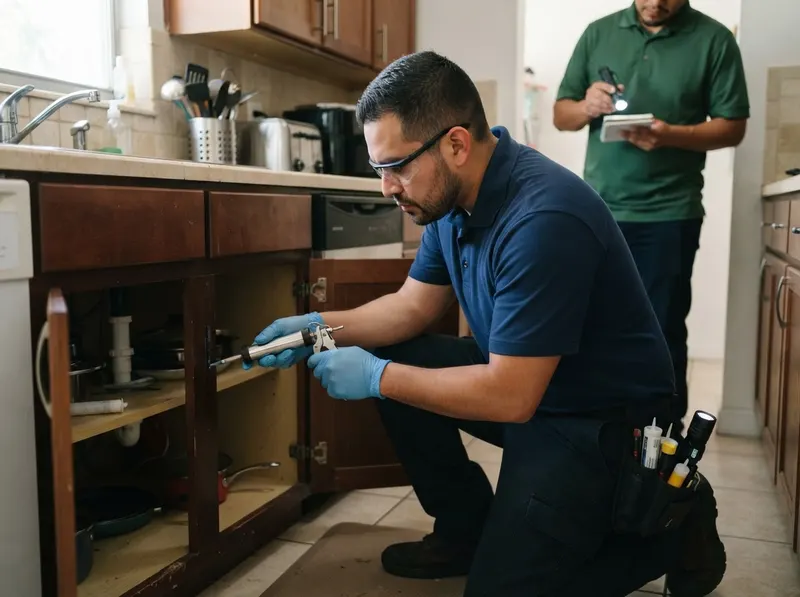
To prevent re-infestation from adjacent units in urban centers like Wynwood and Little Haiti, mechanical exclusion seals common structural pathways. Specialists apply low-VOC elastomeric sealants meeting ASTM International building standards around pipe escutcheons beneath kitchen sinks, bathroom vanities, and laundry connections. Juvenile development is halted using hormonal insect growth regulators evaluated by the National Pesticide Information Center, which inhibit chitin synthesis so immature nymphs cannot molt into reproductive adults. Waste handling and sanitation guidance aligns with HUD Office of Lead Hazard Control and Healthy Homes criteria, reducing airborne cockroach allergen concentrations (Bla g 1 and Bla g 2) that exacerbate tropical respiratory issues. For exterior perimeter mitigation in historic Allapattah, Overtown, and Upper Eastside structures, technicians treat ground-level access junctions adjacent to municipal utility corridors regulated under the Miami-Dade County Water and Sewer Department.