Targeted Cockroach Remediation
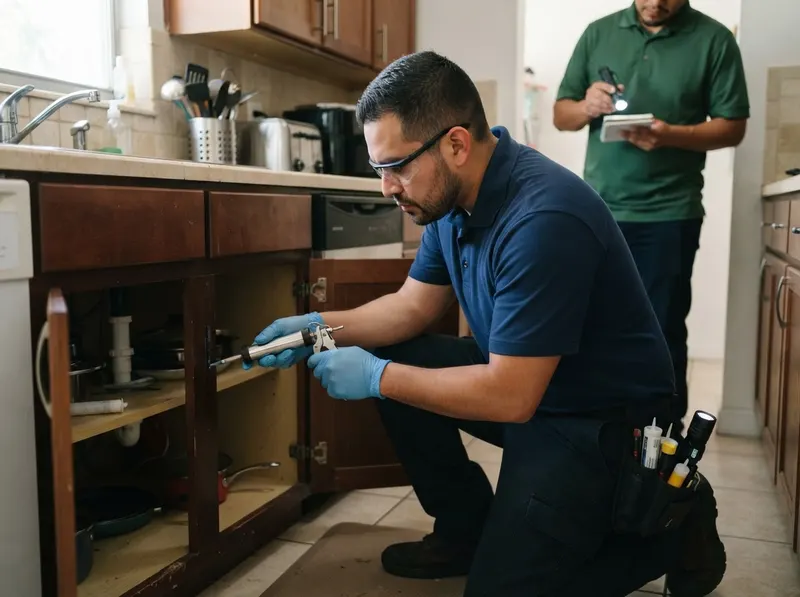
Precise micro-gel placements and insect growth regulators applied directly inside utility chases, electrical voids, and hinge points eliminate German and American cockroaches without aerosolizing broad-spectrum chemicals into breathing zones. The protocol focuses on bait translocation, allowing foraging nymphs and adults to ingest advanced hydramethylnon or indoxacarb matrices and distribute the active ingredient throughout harborage nests hidden behind baseboards and under kitchen appliance compressors. This methodology eliminates reproductive cycles while adhering to strict indoor environmental quality guidelines established by the U.S. Environmental Protection Agency . Each application targets specific harborage micro-climates, ensuring long-term containment without disruptive chemical smells or residue buildup on preparation surfaces.
Get a quote →Condominium Void Exclusion
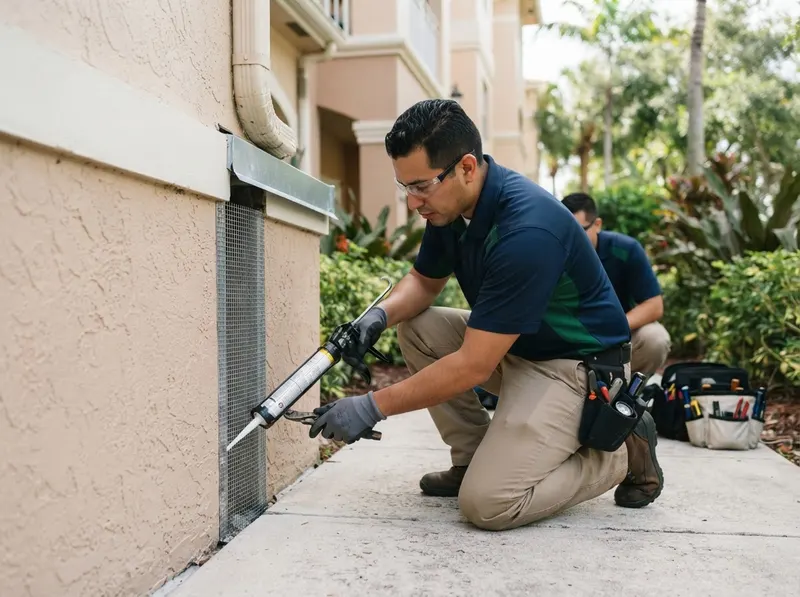
Physical structural sealing along communal plumbing penetrations, fire sprinkler escutcheons, and shared risers mechanically blocks pest transit between adjoining multi-family living units. Technicians deploy non-combustible copper mesh, elastomeric silane polymer sealants, and custom escutcheon collars around drywall cuts behind sinks, toilets, and laundry stacks. By eliminating the negative air-pressure drafts that draw crawling insects through shared utility chases, this non-chemical barrier protects individual residential airspace permanently. The structural isolation technique satisfies high-density residential hygiene recommendations promoted by the U.S. Department of Housing and Urban Development Office of Lead Hazard Control and Healthy Homes , creating a continuous boundary that stops neighboring infestations from crossing property lines.
Get a quote →Subterranean Termite Soil Barriers
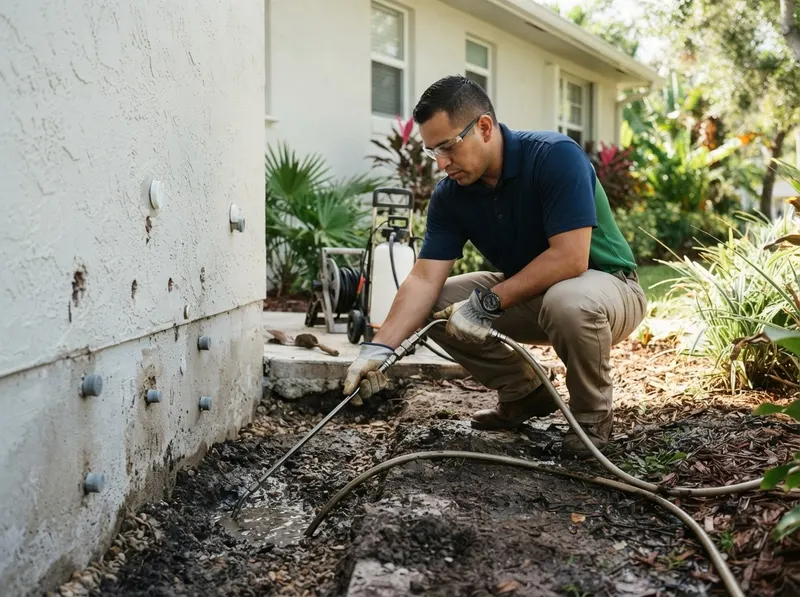
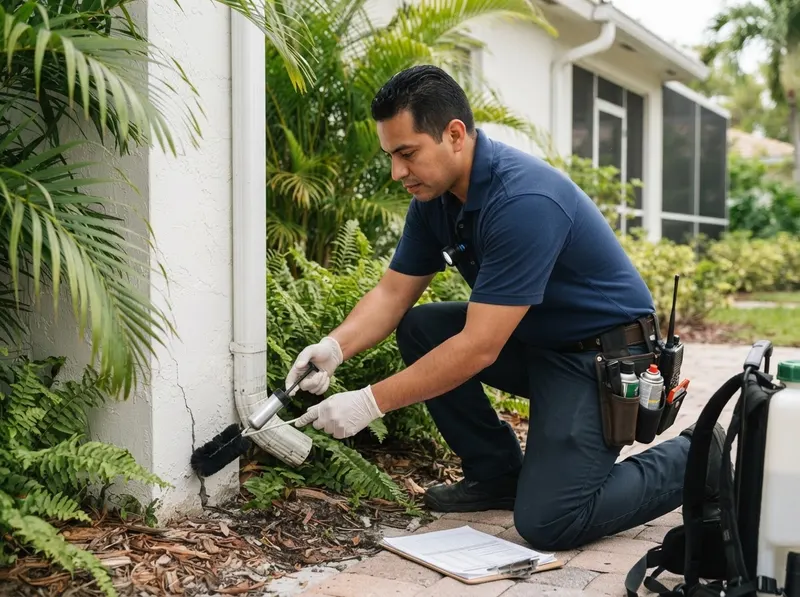
Non-repellent liquid barrier applications placed along building perimeters and foundation footings interrupt subterranean termite colonies before workers penetrate structural concrete or sill plates. UrbanNest Pest Care applies precision trenching and sub-slab injection methods using fipronil chemistries undetectable to subterranean foragers. As termites travel through the treated soil matrix, they acquire microscopic doses of the active ingredient and transfer it to the colony through mutual grooming and food sharing, achieving complete colony elimination within 90 days. This defensive perimeter adheres strictly to application standards set by the Florida Department of Agriculture and Consumer Services , preventing costly structural timber destruction across monolithic concrete foundations, crawl spaces, and stem-wall buildings.
Get a quote →Drywood Termite Spot Defense
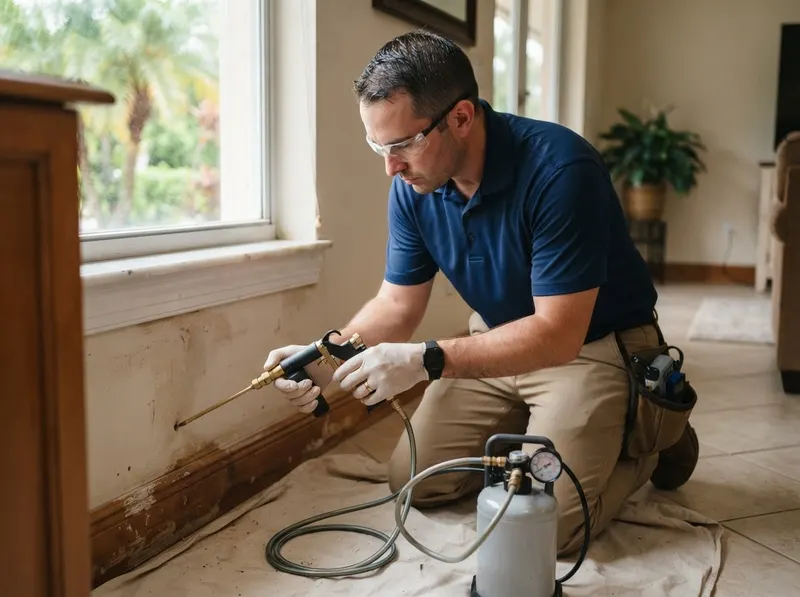
Localized structural injections of targeted wood-preservative termiticides into gallery systems eliminate localized drywood termite colonies without requiring multi-day resident evacuation. Acoustic emission sensors and high-resolution thermal imaging cameras map internal termite galleries within door casings, window framing, baseboards, and tongue-and-groove ceilings. Technicians then drill micro-apertures measuring less than one-eighth inch to inject slow-acting non-repellent transfer agents or borate mineral salts directly into the insect galleries, neutralizing nymphs and alates in place. This targeted spot protocol preserves architectural woodwork, avoids the hazards of structural tenting, and aligns with structural preservation criteria outlined by the National Park Service Technical Preservation Services .
Get a quote →Thermal Bedbug Eradication
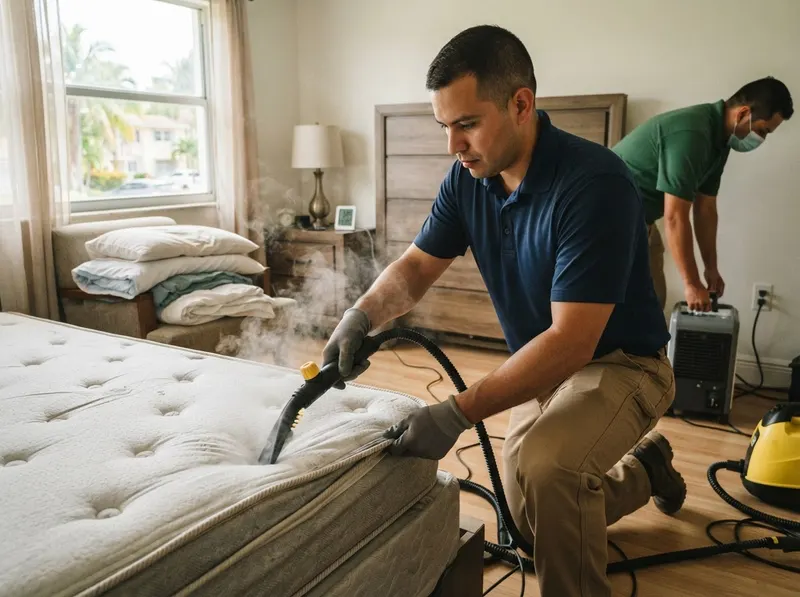
Convective heat treatments raise interior temperatures to lethal thresholds across mattresses, baseboards, and personal furnishings, eliminating bedbug eggs and adults in a single non-chemical visit. Commercial electric heating units and high-velocity axial fans circulate superheated air between 120°F and 135°F throughout the target room, penetrating deep inside box springs, wall voids, electrical outlets, and upholstery seams where insecticides fail to reach. Continuous sensor telemetry monitors core temperature gradients to ensure lethal exposure times that denature insect proteins without damaging sensitive electronics or furniture finishes. This single-day eradication approach adheres to thermal eradication benchmarks documented by the Pest Control Technology Technical Network , eliminating all life stages including pesticide-resistant bedbug strains.
Get a quote →Roof Rat Attic Exclusion
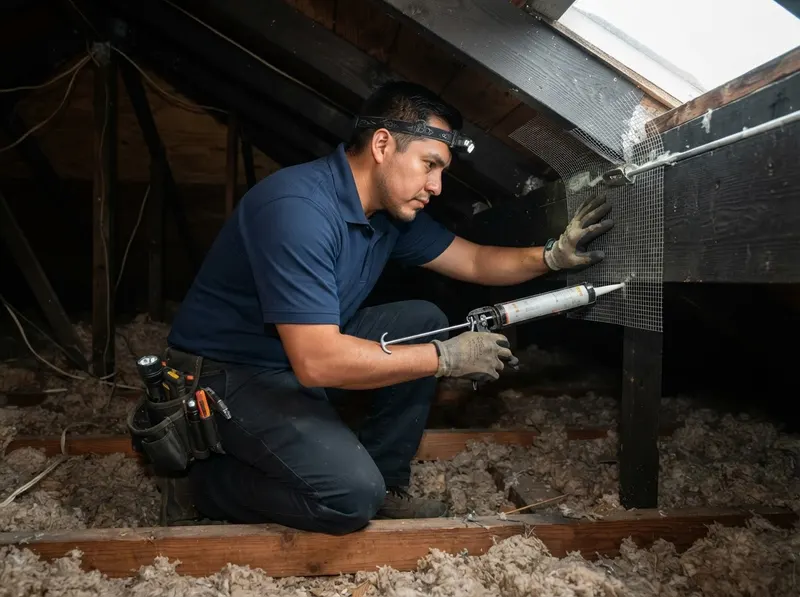
Galvanized steel mesh installation across ridge vents, soffits, and crawlway gaps prevents invasive roof rats from nesting inside structural insulation and attic framework. Technicians execute complete structural inspections to locate exterior entry points as small as one-half inch, sealing vulnerable roof transitions with 19-gauge zinc-coated steel hardware cloth and expanding elastomeric foam backer materials. Once exterior ingress is barred, interior snap traps remove remaining animals humanely within 72 hours, preventing attic contamination, wire chewing fire risks, and insulation fouling. The protocol follows vertebrate exclusion standards defined by the University of Florida IFAS Extension , permanently hardening South Florida residential roofs against chronic wildlife re-entry.
Get a quote →Subtropical Mosquito Reduction
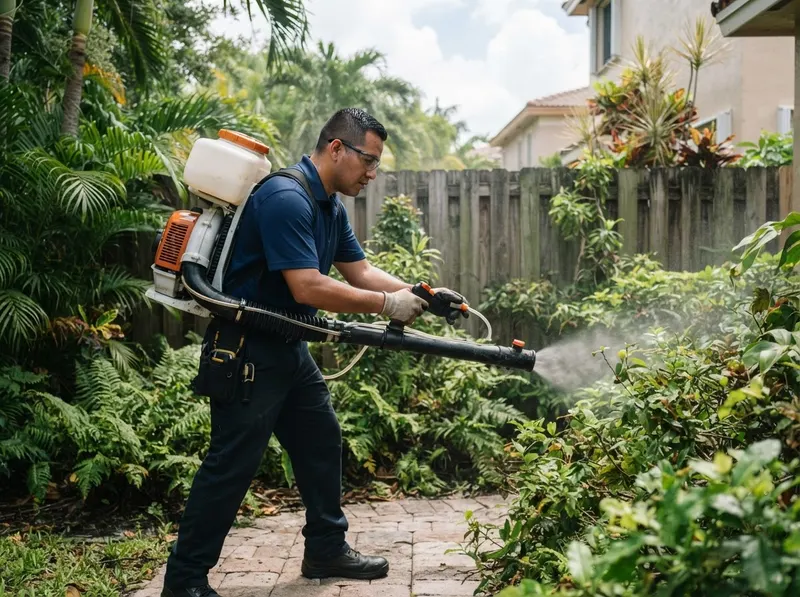
Automated misting inspections and biological larvicide dunks placed in standing drainage catchments reduce Aedes mosquito breeding cycles across private residential grounds. Treatments focus on application of Bacillus thuringiensis israelensis (BTI) bacterial spores into bromeliad cups, French drain basins, roof gutter corners, and decorative water fixtures, killing larvae within 24 hours without harming birds, aquatic life, or pollinators. Residual micro-encapsulated adulticide barrier treatments are applied specifically to the undersides of broadleaf foliage where day-biting vectors rest during daylight hours. This dual-action reduction method supports community-wide arbovirus prevention guidelines governed by the Centers for Disease Control and Prevention Division of Vector-Borne Diseases , restoring safe outdoor usability.
Get a quote →Ghost and Carpenter Ant Control
Carbohydrate-protein bait matrices deployed along trailing lines disrupt ant satellite nests embedded within wall cavities and moisture-damaged framing. Ghost ants and Florida carpenter ants exploit high humidity levels inside window frames, shower surrounds, and behind kitchen plumbing panels, foraging on microscopic moisture films and pantry foodstuffs. Technicians apply targeted micro-droplets of slow-acting bait matrices formulated with thiamethoxam, which foragers carry directly to secondary queens nested inside inaccessible voids. This non-repellent approach avoids splitting colonies into multiple defensive satellite nests, following specialized social insect management methodologies validated by the Entomological Society of America to secure permanent indoor eradication.
Get a quote →